Surface finishing is no longer a labor intensive process it is now a precise one. Today’s industrial landscape the quality of coatings directly affect durability, corrosion resistance and overall perception of the product. As global standards become more stringent and clients demand perfect finishes, many facilities are turning to paint robotics to attain more control and uniformity.
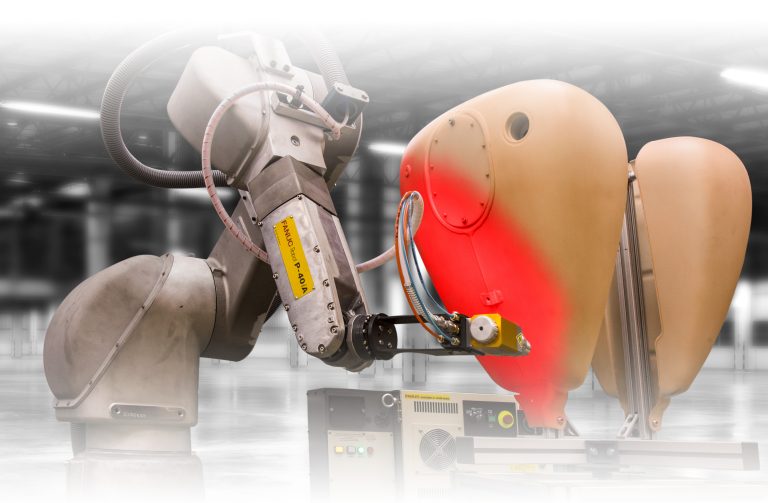
Image credit: automatedsolutions.com.au
A modern paint robot brings structured motion and programmable accuracy to applications that once depended on operator technique. Manufacturers reduce inconsistencies such uneven film construction or excessive use of materials through automation of the paint path, speed and the angles of application. This leads to an application process that is stable and promotes First Time Quality.
Consistency, efficiency, and measurable improvements
Human factors or even small variations in the technique could lead to variations in the thickness and coverage of manual paint. Paint robots eliminate this variation as they repeat the exact motion pattern over and over again throughout the production step. This level is repeatability ensures a consistent finish on all parts and optimized distribution of the materials.
A robot-controlled paint system can increase the efficiency of transfer. The amount of paint that is sprayed over the surface is diminished when the distance and orientation between the applicator’s and component’s are kept precisely. Reducing material waste leads to cost savings while reduced emissions of volatile organic compounds help in ensuring environmental compliance.
The fluid handling integrated into paint robotics guarantees precise mixing ratios in multi-component coatings. The inconsistencies can be eliminated that could affect the integrity and quality of the finished product. By combining stable flow control with the ability to program parameters, companies can tweak atomisation patterns and spray patterns settings in real-time.
Productivity and safer workplaces
The longer time between maintenance is a important benefit of the paint robotic system. Robotic paint cells have a higher efficiency than manual operations because they are able to operate with no interruption. Once programmed, they will maintain an unbroken flow of paint without breaks or monitoring.
It is vital to think about security in any place that employs solvent-based or bi-component coatings. If you are dealing with flammable or flammable materials, atomised paints can create dangerous atmospheres. Modern paint robots are designed for safe operation even in the most hazardous situations. They minimize the risk of exposure for workers to hazardous substances, and enhance safety at work.
The technology of conveyor tracking enhances productivity further, allowing for robot-controlled painting of parts while they are moving. This allows for a larger working area and helps to keep production lines in motion.
Australian Automation Expertise Supporting Industry
Access to experienced automation partners is vital for those who are looking to modernize their finishing processes. In Australia, Automated Solutions has established a solid reputation for offering advanced robotic integration solutions. With an extensive understanding of automation engineering, the team works as FANUC robotic integrators certified, helping businesses implement tailored robotic paint solutions that work with their objectives.
Automated Solutions helps manufacturers evaluate their processes, as well as design robotic paint cells, combining experience from industry with technical expertise. Facilities will gain a greater understanding of improvements in performance through the use of simulation, collaborative planning and system integration.
The adoption of paint robots isn’t only about automation. It’s about making tangible improvements in efficiency, quality and security. A well-engineered system for painting transforms the process of finishing surfaces into a controlled efficient, repeatable, and economical process. With the help of expert professionals in automation, manufacturers are able to improve their competitiveness and ensure the long term in an increasingly competitive market.